
Why Is Medicai the Best for Scalable Digital X-ray?
Many radiology teams still email CDs or wait for VPN logins when a trauma patient arrives from another hospital. Those delays add minutes to every read and force staff to juggle extra software accounts. Medicai replaces that friction with one cloud workspace that stores, views, and routes X-ray studies without local installs.
By the final section you will know the exact features that let a clinic scale its digital X-ray volume, how its pricing model compares with traditional PACS contracts, and which care settings gain the most from its zero-footprint viewer and AI tools.
What Is Medicai?
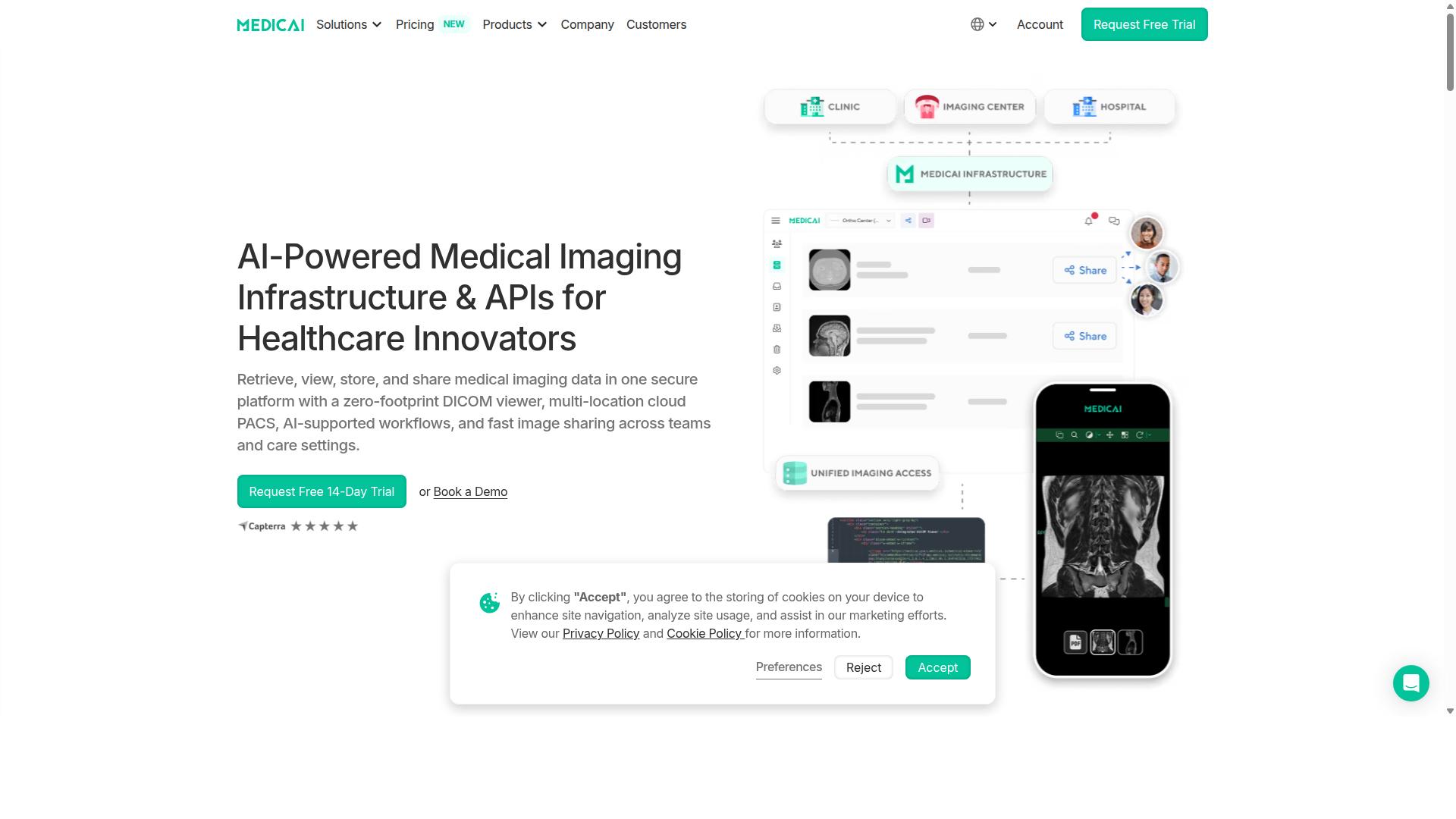
Medicai is a cloud-based medical imaging platform that enables healthcare providers to retrieve, view, store, and share medical imaging data in one secure environment.
The platform provides a zero-footprint DICOM viewer that operates without local software installation. This capability allows healthcare teams across multiple sites to access diagnostic imaging through any standard web browser. For the next step, read our overview of Can You Use Nutritional Yeast to Make Bread.
Healthcare organizations gain secure storage, retrieval, and sharing capabilities that eliminate the need for on-premise infrastructure. The cloud PACS system supports medical imaging workflows across different care locations and settings.
Medicai delivers Imaging Infrastructure as a Service, which modernizes medical imaging workflows and enables interoperability between systems. The VC-backed healthcare startup focuses on scalable digital X-ray solutions that support teleradiology and enterprise imaging requirements.
Why Is Medicai the Best for Scalable Digital X-ray?
Medicai handles 1 million+ imaging studies per year, proving its capacity to scale with growing radiology departments.
The platform currently stores 1.7 million+ studies while processing over 50 million API transactions annually. This track record shows consistent performance under heavy demand.
Elastic infrastructure automatically adjusts capacity during peak loads. Medical facilities experience no slowdowns even when multiple sites upload high-resolution images simultaneously.
The system maintains HIPAA and GDPR compliance while following OWASP security guidelines. Medical organizations can expand their digital X-ray operations without worrying about regulatory violations.
Microsoft Azure partnership provides the underlying cloud foundation for this scalability. The infrastructure supports both small clinics and large hospital networks with the same reliability.
Seventy clinics and hospitals already use Medicai for their imaging needs. Ten thousand active doctors access studies through the platform daily.
Real-time collaboration features allow multiple specialists to review the same images at once. This capability becomes essential when departments grow or add remote reading services.
The platform reduces diagnosis time by 65 percent through efficient study access and workflow tools. Faster turnaround improves patient care while handling increased caseloads.
Image compression and bandwidth optimization ensure smooth performance across different network conditions. Remote sites maintain access quality without expensive infrastructure upgrades.
Key Features and What Makes Medicai Stand Out
The platform's feature set centers on interoperability, speed, and security for radiology workflows. These capabilities allow imaging departments to handle growing digital X-ray volumes without adding complexity to daily operations.
Most radiology teams face three recurring problems: scattered image storage, slow access to studies, and delayed specialist review. Medicai addresses each issue through targeted tools that work together in a single environment.
Interoperability removes the need for manual file transfers between systems. Fast study delivery reduces wait times for radiologists and referring physicians. Built-in security measures keep patient data protected during transfer and storage.
Cloud PACS and Medical Image Exchange
A single cloud PACS instance replaces multiple on-premise servers and enables instant image routing between any connected site.
The Medical Imaging Uploader and DICOM Gateway allow sites to send studies directly into the system. The Vendor Neutral Archive stores images in a central location while Backup and Disaster Recovery protects data against loss.
One-click routing sends studies to the correct destination, and HL7/FHIR delivery passes results to downstream systems without extra steps. This setup supports multi-site deployment and keeps digital radiography data accessible across locations.
Image exchange happens in real time, so clinicians at different facilities can review the same study without waiting for physical media or external transfers. For related context, see our guide to Supplemental Dental Insurance With No Waiting Period.
Zero-Footprint DICOM Viewer
The viewer runs in any modern browser and supports side-by-side comparison at full diagnostic resolution on mobile, tablet, or desktop.
Over 300k visualizations occurred in the past year, showing consistent use across different care settings. Real-time collaboration sessions allow multiple users to review studies together.
Zero-footprint access means no local software installation is needed, which simplifies deployment across hospitals, clinics, and remote reading stations.
AI-Supported Workflows
Pre-configured AI models flag critical findings and auto-route studies to the correct specialist within seconds of upload.
Partnerships with MD.ai and Rayscape.ai bring validated models into the radiology workflow.
This automated routing shortens the time between image acquisition and specialist review. It also reduces the chance that urgent findings sit in a general queue.
AI-supported workflows help imaging departments manage larger digital X-ray volumes while maintaining timely patient care.
Pricing and Plans
Two transparent subscription tiers remove per-study fees and scale storage automatically. Medicai offers clear monthly billing without hidden charges or complicated usage tracking. Each plan provides unlimited user accounts and flexible storage that expands as imaging volumes grow.
The Starter plan costs $249 per month and includes 500 GB of cloud storage. This tier supports clinics and smaller practices that need reliable digital radiography storage without upfront commitments.
The Standard plan costs $749 per month and provides 2 TB of cloud storage. This option includes one connected location for multi-site deployment. Medical imaging facilities with higher volumes benefit from this tier, which maintains the same unlimited user accounts and automatic scaling features.
Yearly billing reduces costs by 15 percent. The Starter plan drops to $209 per month, while the Standard plan costs $639 per month when paid annually. Enterprise customers receive custom pricing for larger storage needs, multiple connected locations, and external partner access requirements.
A 14-day trial of Starter plan features is available without requiring a credit card. The DICOM Gateway setup carries a one-time $1,000 fee per location for secure image transmission. Per-study pricing remains available for enterprise customers who prefer usage-based billing instead of fixed monthly rates.
Trust Signals
Certification and infrastructure choices signal that patient data is handled to enterprise standards. Medicai processes over 1 million studies annually while maintaining strict security protocols across its platform. This combination of compliance and technical capability supports healthcare organizations that need reliable digital radiography solutions at scale.
Trust signals become essential when medical facilities handle sensitive diagnostic imaging across multiple locations. The platform currently serves 70 clinics and hospitals with 10,000 active doctors accessing patient studies. These usage numbers demonstrate how healthcare providers rely on the system for their daily radiology workflow needs.
Compliance and Security
HIPAA and GDPR compliance plus FDA/CEE clearance ensure the platform meets U.S. and EU privacy and safety regulations. End-to-end AES-256 encryption protects all DICOM studies during transmission and storage. Role-based access logging tracks every interaction with patient imaging data throughout the system.
Annual SOC 2 Type II audits verify that security controls function as designed over extended periods. The platform follows OWASP security guidelines throughout its development and maintenance processes. These certifications address the regulatory requirements that hospitals and clinics face when implementing cloud PACS solutions for their diagnostic imaging needs.
Medical imaging platforms must maintain these standards while supporting growing volumes of studies and users. The combination of regulatory compliance and technical security measures creates a foundation for scalable digital X-ray operations that meet institutional requirements.
Global Infrastructure
Data centers on Microsoft Azure, Amazon AWS, and Hetzner give sub-100 ms latency worldwide and 99.99 percent uptime SLA. This multi-cloud approach distributes imaging studies across geographic regions to maintain consistent access speeds for healthcare providers regardless of location.
Automatic failover between regions ensures continuous availability when individual data centers experience issues. Daily immutable backups retained for 35 days protect against data loss while supporting recovery requirements for medical imaging archives.
The infrastructure supports 50 million yearly API transactions and maintains 1.7 million studies in active storage. This capacity enables healthcare organizations to scale their digital radiography operations without infrastructure limitations affecting their radiology workflow or diagnostic capabilities.
Who Should Use Medicai
Hospitals, imaging centers, and specialty groups that need secure multi-location image access are the primary users. These organizations rely on scalable digital X-ray solutions that maintain quality across different sites and departments. Medicai provides the cloud PACS and interoperability features required for such complex environments.
Orthopedics practices benefit from high-resolution imaging for fracture assessment and surgical planning. Neurology departments use the platform for detailed brain and spine studies that require precise visualization. Oncology centers depend on consistent image archiving to track tumor progression over multiple treatment cycles.
Radiology groups access DICOM studies from any location through the zero-footprint viewer. Cardiology practices review cardiac imaging with mobile access for urgent consultations. Ophthalmology clinics store and compare retinal scans across patient visits with the same system.
OB-GYN offices review fetal development studies with secure sharing capabilities. Pulmonology departments access chest X-rays for respiratory condition monitoring. Dentistry practices store panoramic images within the same enterprise imaging framework.
Gastroenterology specialists review contrast studies and endoscopy images through unified workflows. Teleradiology groups use Medicai for night-call coverage, allowing remote radiologists to interpret studies from any connected facility during overnight hours when on-site staffing is limited.
Virtual care providers integrate digital radiography into telemedicine platforms through HL7 integration and FHIR API connections. Personal injury lawyers access patient imaging records through the Patient Portal for case documentation. Tumor boards coordinate multi-specialty reviews using real-time collaboration tools built into the platform.
Clinical trials require standardized image protocols across participating sites, which Medicai supports through its vendor-neutral archive capabilities. Medical education organizations utilize the same system for teaching files and resident training programs.
Final Verdict
Medicai delivers enterprise-grade imaging infrastructure at transparent monthly pricing, backed by global compliance and uptime guarantees.
The platform processes over one million imaging studies each year. It handles more than fifty million API transactions across its network. These numbers show consistent reliability for facilities that need scalable digital X-ray solutions.
Two pricing tiers start at two hundred forty-nine dollars per month. Organizations can choose the option that matches their study volume and team size without hidden fees or long-term lock-ins.
Prospective users can test the system through a fourteen-day pilot program. This trial period allows radiology teams to evaluate performance with their actual digital radiography workflows before committing to a subscription.
Interested facilities should contact the sales team directly. They can reach Medicai USA at plus one eight three two two two zero one zero three five or Medicai Romania at plus four zero three one six three zero five eight seven five.
Interested parties can also email sales at medicai dot org to schedule their pilot. The team will guide new users through setup and answer questions about integrating the platform into existing radiology workflows.